A mathematician is a person who can find analogies between theorems; a better mathematician is one who can see analogies between proofs; the best mathematician can notice analogies between theories. One can imagine that the ultimate mathematician is one who can see analogies between analogies.
— Stefan Banach, quoted in Stanisław Ulam, Adventures of a Mathematician (1976)
Banach's hierarchy describes a ladder of mathematical ability, but it also describes something more general — a ladder of scientific seeing. To find an analogy between two theorems is to spot a local rhyme. To find one between proofs is to spot a method that travels. Between theories — to spot a hidden architecture. Between analogies — to glimpse the architecture of architectures, the shape that the shapes themselves share. Banach placed this last rung at the edge of imagination. He thought one or two people per generation might reach it.
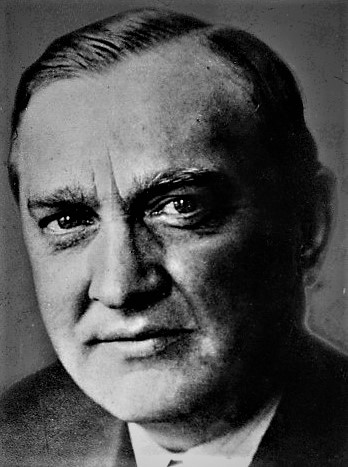
He was, by the standards of his own taxonomy, near the top. Stefan Banach was born in Kraków in 1892, the illegitimate son of a railway clerk and a mother who disappeared from his life before his second birthday. He was raised by a laundress, educated partly by himself, and trained in mathematics in the back rooms of cafés and the margins of books he could not always afford. The decisive moment of his life was, by all accounts, an accident. In a Kraków park in 1916, Hugo Steinhaus overheard two young men on a bench discussing Lebesgue integration, walked over, and discovered Banach. Steinhaus would later say that Banach was his greatest mathematical discovery.
From there the story compresses. PhD in 1920. The founding of functional analysis as a discipline — Banach spaces, the Hahn–Banach theorem, the Banach–Steinhaus principle, the Banach–Alaoglu theorem, the fixed-point theorem that bears his name. The Banach–Tarski paradox, in 1924, in which a sphere is taken apart and reassembled into two spheres of the same size — geometry's gentle assault on intuition. And, through the 1930s, the Scottish Café in Lwów, where Banach and his circle scribbled open problems onto a marble-topped table and eventually into a thick notebook the waitress kept behind the counter — the Scottish Book, the most famous physical artifact in twentieth-century mathematics.
The war ended Lwów's golden age. Under Nazi occupation Banach survived, like many other Polish intellectuals, by feeding lice at Rudolf Weigl's typhus-vaccine institute — a job that conferred a precious German work permit and saved his life for a few more years. He died of lung cancer in August 1945, weeks after the war ended, never having seen Lwów become Lviv. His ladder remained.
Eighty years later, the rungs are being climbed at a pace that would have astonished him — by systems that do not, in any conventional sense, understand what they are doing.
The kinds of analogies modern AI finds are no longer the kind a single human can hold in mind. AlphaFold, in 2020, looked across hundreds of millions of evolutionary sequences and noticed an analogy between covariation in amino-acid columns and three-dimensional contact in folded proteins — an analogy that had been suspected for fifty years and never made to deliver. The protein-folding problem, posed by Anfinsen in 1972 and immovable for half a century, was substantially solved by a system trained to recognize patterns across an entire kingdom of biology at once. AlphaTensor, in 2022, searched the space of bilinear algorithms and surfaced new ways of multiplying matrices faster than Strassen — methods that had eluded human algebraists since 1969. FunSearch found new constructions for the cap-set problem; AlphaGeometry took medals at the International Mathematical Olympiad by proposing auxiliary constructions humans had stopped looking for. Materials models proposed hundreds of thousands of stable crystal structures, more than the entire previous history of solid-state physics had catalogued. The move, in each case, is the same: a sweep across a corpus too large for any individual to hold, and the recovery of a pattern that, in retrospect, was always there.
These are Banach's first two rungs at industrial scale. Analogies between theorems and between proofs — between sequences and structures, between configurations and energies, between problems and the tactics that crack them — have become tractable in a way no previous generation could have imagined. The third rung is also beginning to give. In 2021, a collaboration between DeepMind and the mathematicians Geordie Williamson and Marc Lackenby produced two non-trivial results — one in representation theory, one in knot theory — by training neural networks to suggest which variables, in an enormous space of invariants, were related, and letting human mathematicians follow the suggestion to a theorem. The model was, in effect, proposing analogies between theories, and proposing them correctly.
What remains is Banach's fourth rung. It is a strange rung to reason about, because no one quite knows what an example would look like. The historical candidates — the Langlands program, mirror symmetry, the parallel between thermodynamics and information, the recurring appearance of the same exceptional Lie groups in physics, geometry, and combinatorics — share the property that the human who first glimpsed them could not, at the moment of glimpsing, have said precisely what they had glimpsed. They are pre-theoretic intuitions about structural family resemblance, and they have historically been the province of a handful of mathematicians per generation: Grothendieck, Langlands, Connes, a few others.
But the property that makes this rung rare for humans — the need to hold thousands of unrelated structures in one mind long enough to feel them rhyme — is precisely the property that scales naturally in machines. A sufficiently general model trained across enough domains is, structurally, doing nothing else. It is being asked, every gradient step, to compress disparate regimes into a single representation, and a single representation is exactly a structural rhyme made explicit. The reason foundation models surprise us is that they keep finding such rhymes in places — between code and biology, between protein language and natural language, between physical simulation and game-play — that no human had reason to look.
It is too early to say that AI has reached Banach's fourth rung. It is not too early to notice that the architecture of the climb has changed. Banach's ladder was a description of individual genius — of the rare mind that could hold one more level of abstraction than the previous mind. The ladder remains; the climber does not. What used to be the work of one mathematician per generation is now the routine output of a training run, and the last step, the one Banach placed at the edge of imagination, is no longer obviously out of reach. He drew the ladder. He did not draw the ladder being climbed by something other than us.